
Reef science
Marine life at Molokini Crater
The short answer Scientists have measured more fish inside Molokini's reserve than outside it, tracked its sharks, and watched what happens when boats stop coming. This page covers what that research found.
On this page
Researchers have compared life inside Molokini's protected district with the water outside it. The studies are narrow and specific. This page sticks to what they found.
What the research measures
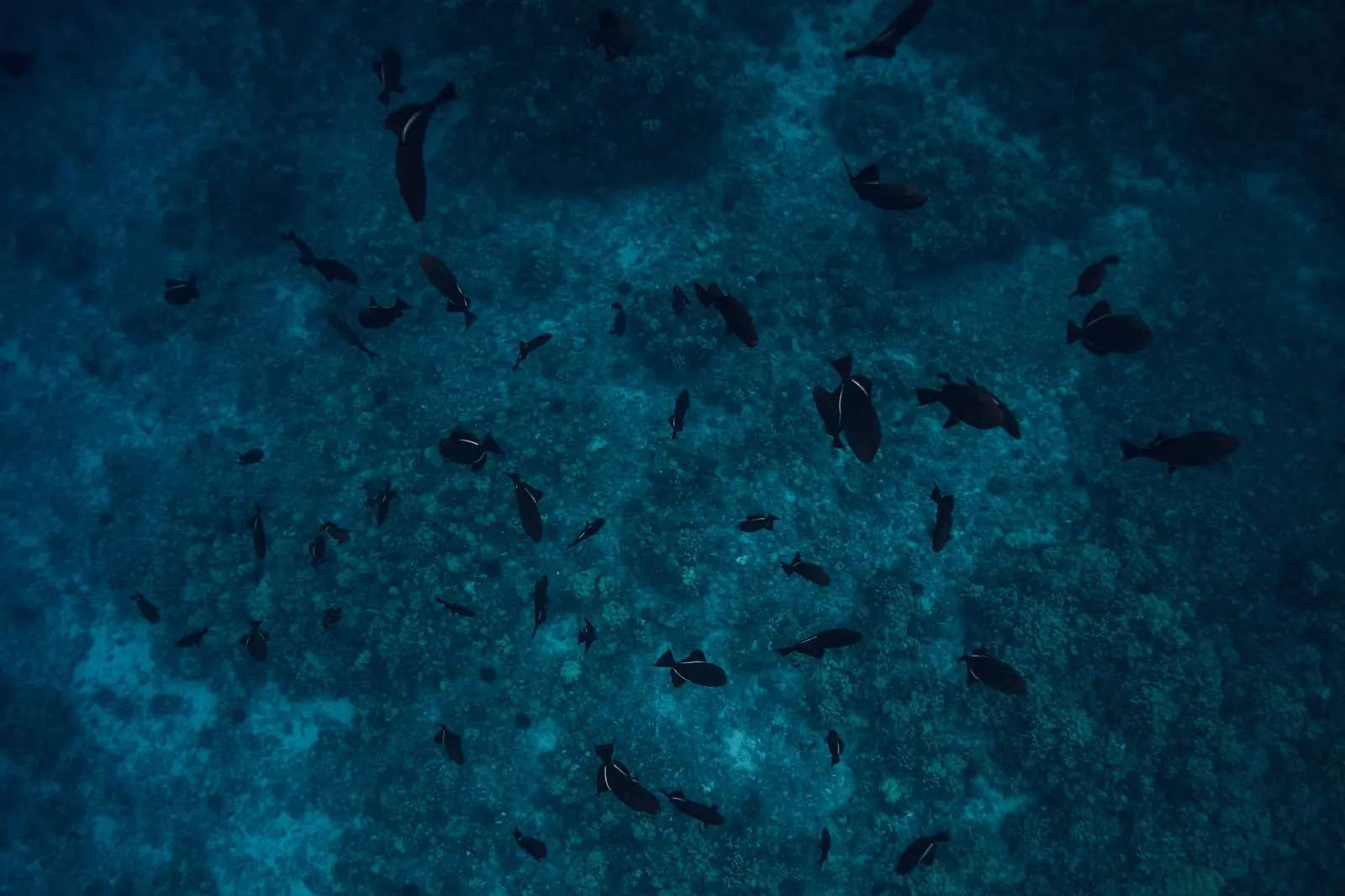
The research cited here counts fish by weight (biomass), tags fish to see where they go, and looks at how boats affect fish. The state describes the diversity of fish and other marine life in the district as among the most impressive in Hawaiʻi.
More fish inside the line
A 2023 research paper reports fish biomass more than six times higher inside the district than in the adjacent areas, a figure it takes from earlier work. The authors rank Molokini's "reserve effect" among the top in Hawaiʻi.
The 2020 pause
When tours stopped in 2020, fish weight inside the district rose quickly, and it fell back once visitors returned. It covers one reserve in one year, so treat it as a strong hint, not a rule for every reef.
Sharks, jacks and where they spend their time
A tagging study followed five predators: whitetip reef sharks, grey reef sharks, giant trevally (ulua), bluefin trevally (ʻōmilu) and green jobfish (uku). Grey reef sharks and ulua were detected mostly near the deep water of the Back Wall. Whitetips used the crater, mostly at night.
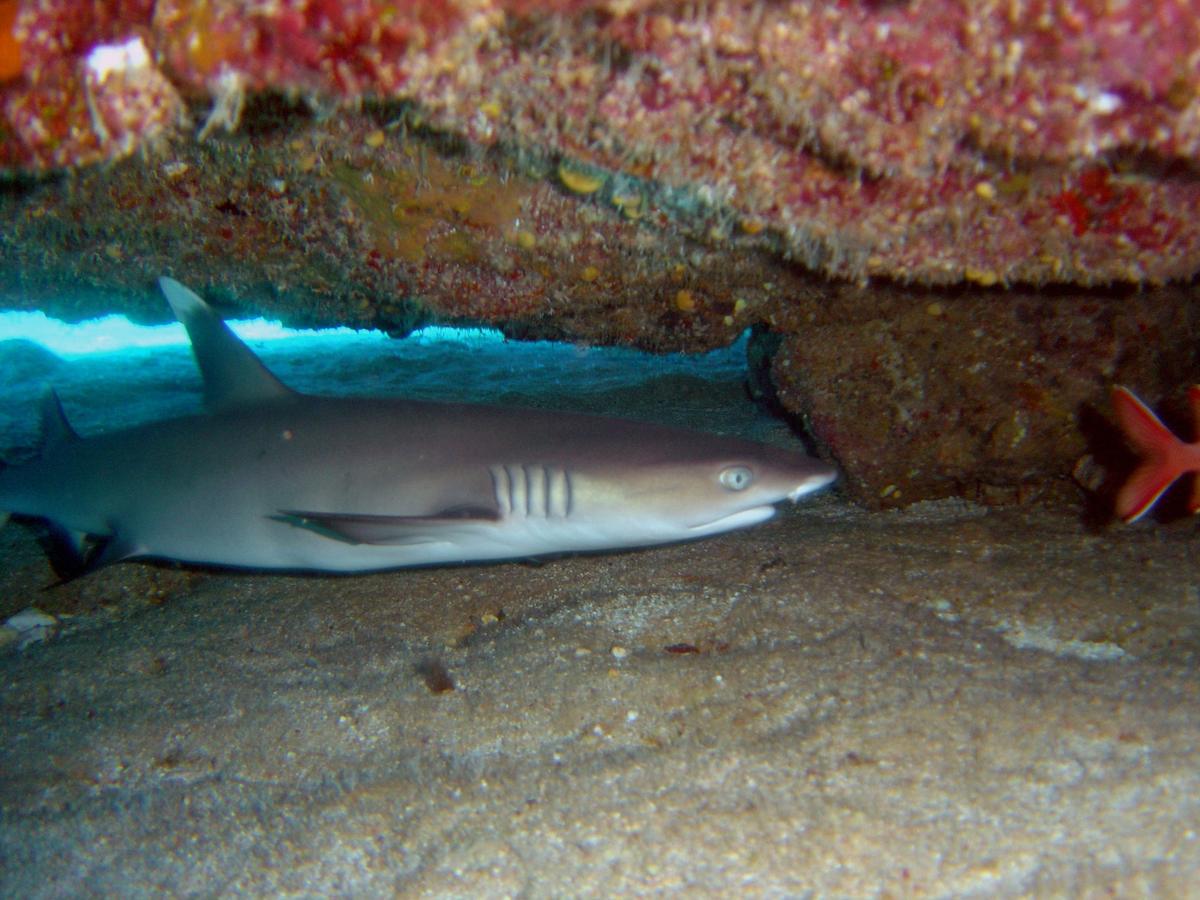
Those are tagging samples, not population counts. For the full picture, including what the state's incident records show, see sharks at Molokini.
Coral
A 2010 University of Hawaiʻi and Oregon State report, done with the state's Division of Aquatic Resources, says the district has about 38 species of hard coral and nearly 100 species of algae. A shallow coral reef lies inside the crater, protected from major ocean swells. Black coral used to be common in the deeper water around Molokini, and people harvested a lot of it. Only small colonies are listed today, on the Back Wall.
Big animals
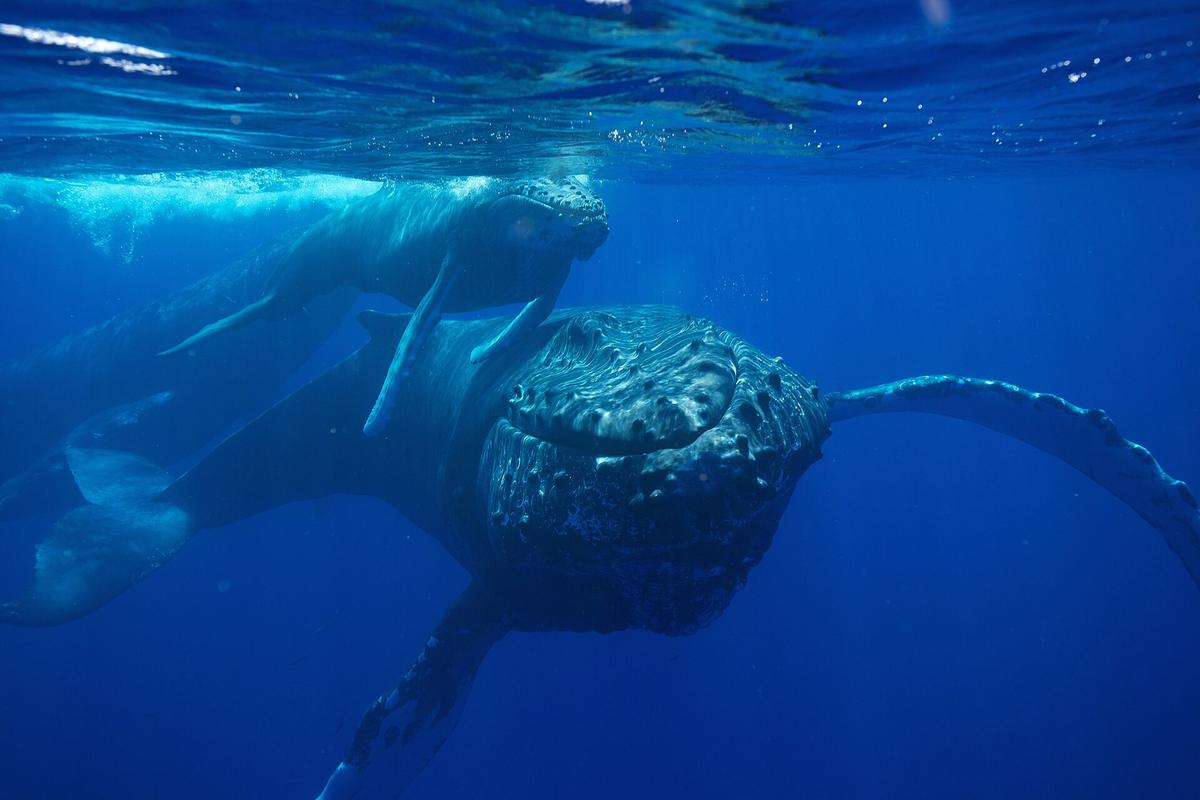
Humpback whales have been known to come into the cove. In Hawaiʻi, humpbacks are usually seen between November and April, with the peak in January through March.
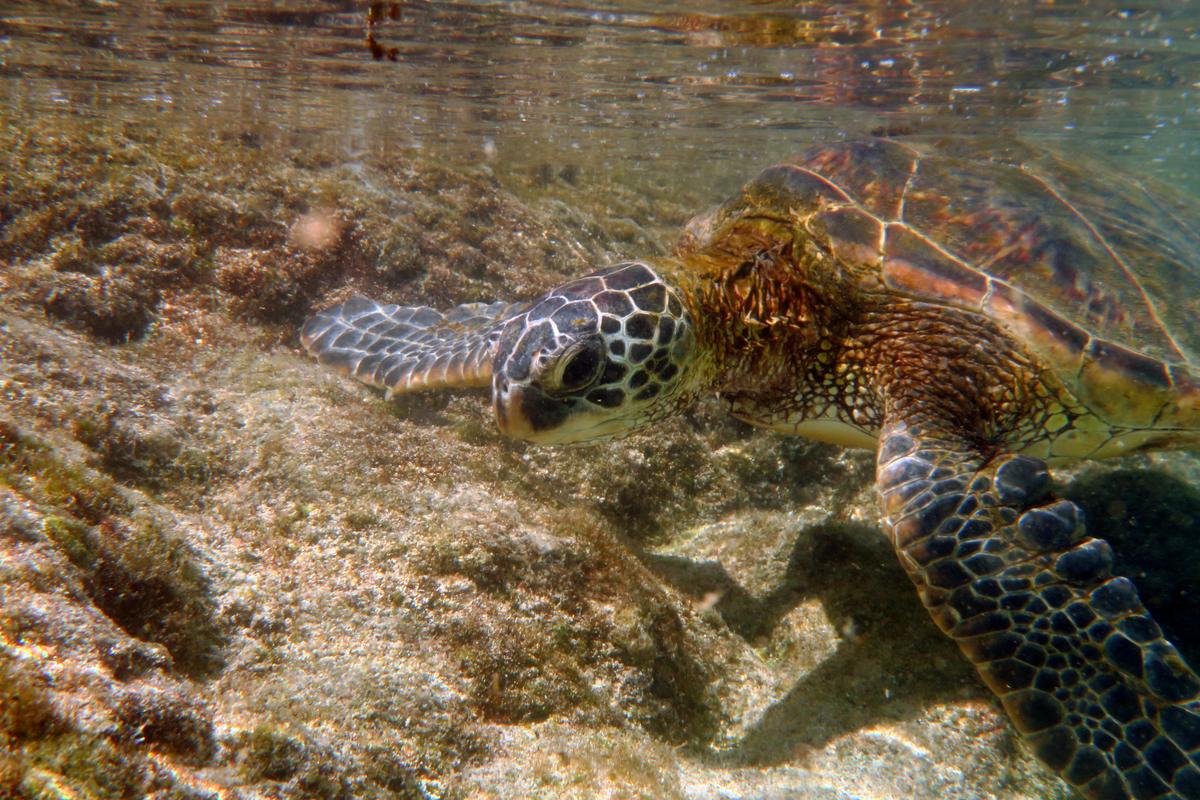
Green sea turtles (honu) are listed as threatened. Many Molokini trips add a second stop elsewhere, and some list it as a turtle stop.
Reef fish you may notice
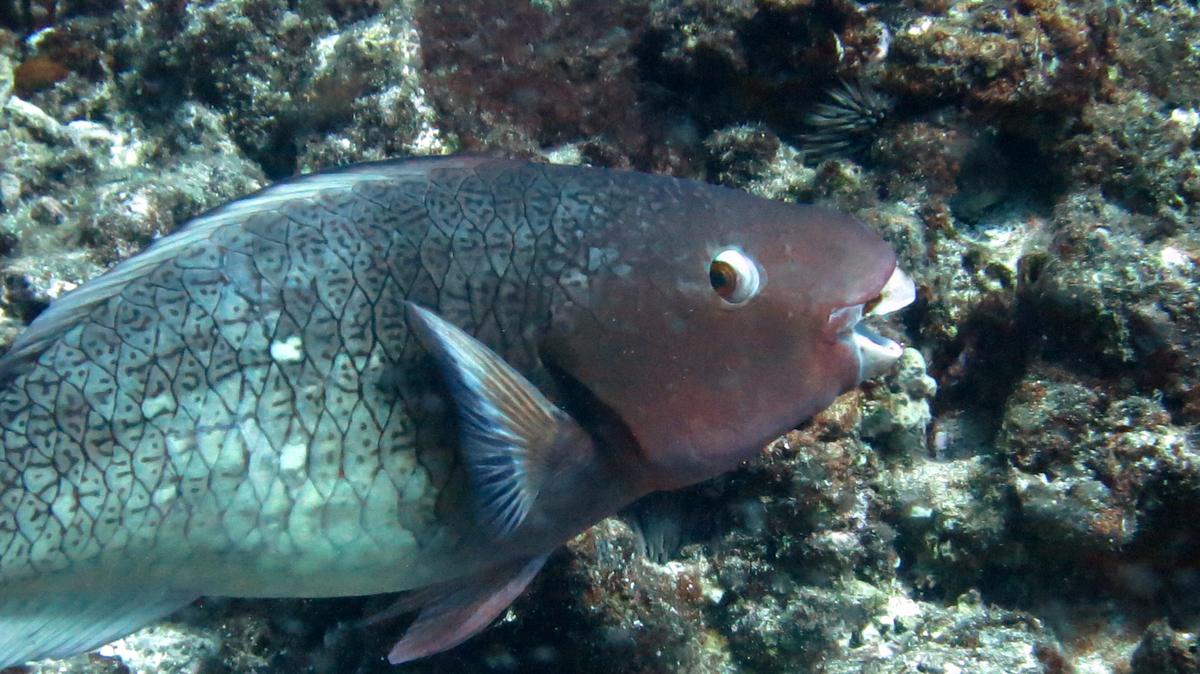
Sightings vary from day to day. The fish guide names the reef fish you are likeliest to see, with their Hawaiian names, among them butterflyfish and parrotfish (uhu).
Above the water
The islet belongs to seabirds. Its main residents are ʻuaʻu kani, the wedge-tailed shearwater, and ʻiwa, the great frigatebird, is often seen soaring over it. A plant called ʻihi (Portulaca molokiniensis) is endemic to Molokini and listed as federally endangered. The rules that keep people off the islet are covered in the Molokini guide.
Do boats change how fish behave
A 2016 to 2017 study found that with over 12 vessels in the district, half of the ʻōmilu left their preferred shallow reef habitat. The study measured one species, so it does not say how every fish reacts. To keep your own effect small, read how to snorkel sustainably.
Keep reading
- Crater guide: where, how deep, rules, timing.
- Fish guide: names and how to tell fish apart.
Sources and corrections
The 9 sources for this page
- Maui – Molokini Shoal (HAR 13-31) (Hawaiʻi DLNR, Division of Aquatic Resources (DAR)), read . Backs: State description of the district's diversity. · Black coral once abundant in the deeper water, heavily harvested; small colonies on the back wall. · Humpbacks enter the cove.
- Weng et al. (2023), PLOS ONE 18(4): e0283683, 'Decreased tourism during the COVID-19 pandemic positively affects reef fish in a high use marine protected area' (co-authors from UH Mānoa and DLNR DAR). Read in full as Exhibit 3 of BLNR Item F-4: https://dlnr.hawaii.gov/wp-content/uploads/2023/05/F-4.pdf (UH Mānoa / Hawaiʻi DLNR DAR / VIMS), read . Backs: Biomass more than six times greater inside the district. · Biomass rose during the 2020 shutdown and fell back when visitors returned.
- Filous et al. (2017), Marine Pollution Bulletin 121:274-281, study of reef predators and crowding in the Molokini MLCD (University of Hawaiʻi at Mānoa + DAR Maui). Read in full as Exhibit 2 of BLNR Item F-4 (May 2023): https://dlnr.hawaii.gov/wp-content/uploads/2023/05/F-4.pdf (University of Hawaiʻi at Mānoa / Hawaiʻi DLNR DAR), read . Backs: Tagged predators. · Where grey reef sharks, ulua and whitetips spend their time. · Inside the crater is a shallow coral reef sheltered from major swells.
- Marine Recreation at the Molokini Shoal MLCD, final report (Szuster and Needham, for Hawaiʻi DLNR DAR), read . Backs: A 2010 University of Hawaiʻi and Oregon State report with the state's Division of Aquatic Resources: about 38 species of hard coral and nearly 100 species of algae in the district.
- About the Sanctuary, Hawaiian Islands Humpback Whale National Marine Sanctuary (NOAA Office of National Marine Sanctuaries), read . Backs: Humpback season in Hawaiʻi.
- Maui Offshore Islet Seabird Sanctuaries (Hawaiʻi DLNR, DOFAW), read . Backs: Seabirds. · ʻIhi plant.
- Board of Land and Natural Resources, 26 May 2023, Item F-4: DAR/DOBOR briefing on Molokini rule amendments (with exhibits) (Hawaiʻi DLNR), read . Backs: With more than 12 vessels, half of the ʻōmilu were displaced from preferred reef.
- Protecting Marine Species (Hawaiʻi DLNR, DOBOR), read . Backs: Sea turtle status; no Molokini count.
- pacwhale.com (Pacific Whale Foundation), read . Backs: Many Molokini trips add a second stop elsewhere (for example Pacific Whale Foundation's trips list a second site).