
Plan your trip
Are there sharks at Molokini Crater?
The short answer Yes. Whitetip and grey reef sharks live around Molokini, and the state's shark incident list names no incident there. The bigger risk for snorkelers is drowning.
On this page
Yes, sharks live around Molokini. The state's shark incident list names no incident at Molokini. The state says encounters between sharks and people in Hawaiian waters are infrequent, and the larger danger in these waters is drowning.
Which sharks
A University of Hawaiʻi and state tagging study found two shark species around the crater.
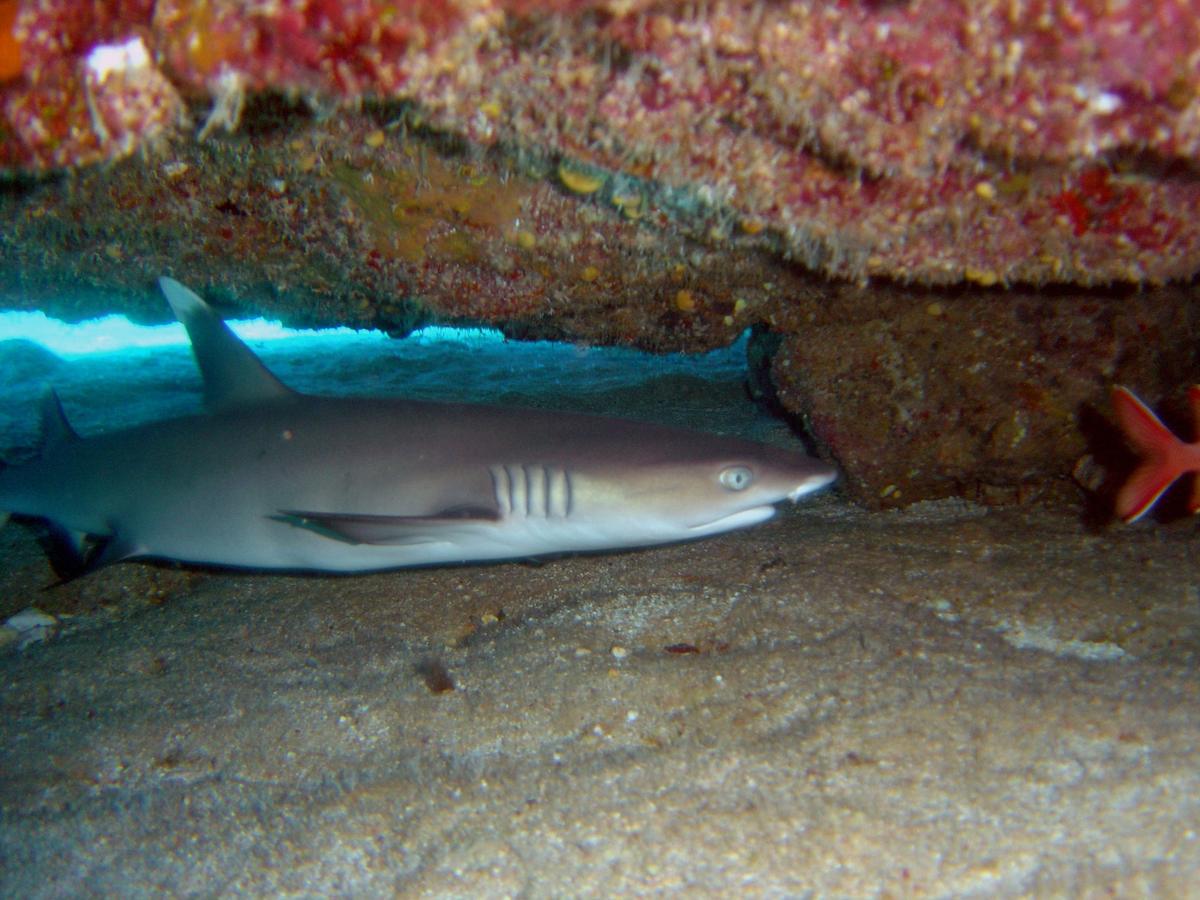
Whitetip reef sharks have white tips on their fins. They used the crater, mostly at night.
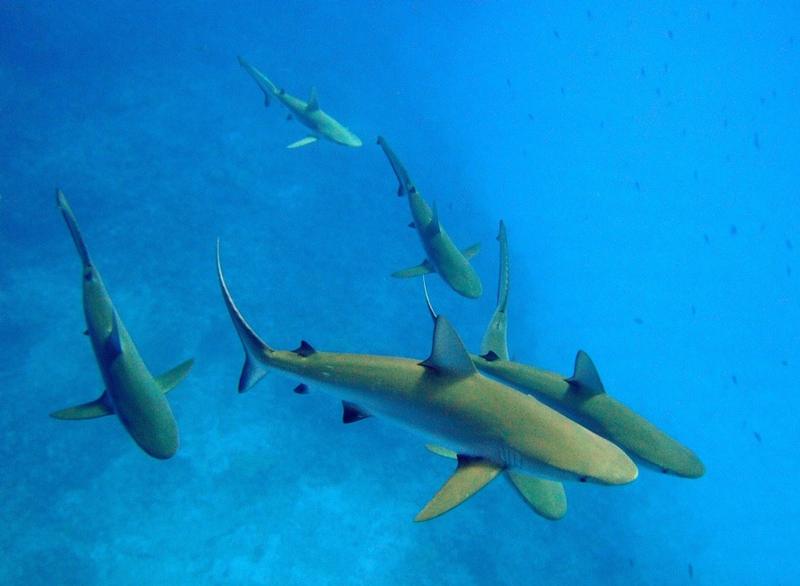
Grey reef sharks were detected mainly near the deep water of the Back Wall, with giant trevally (ulua).
Where you would be
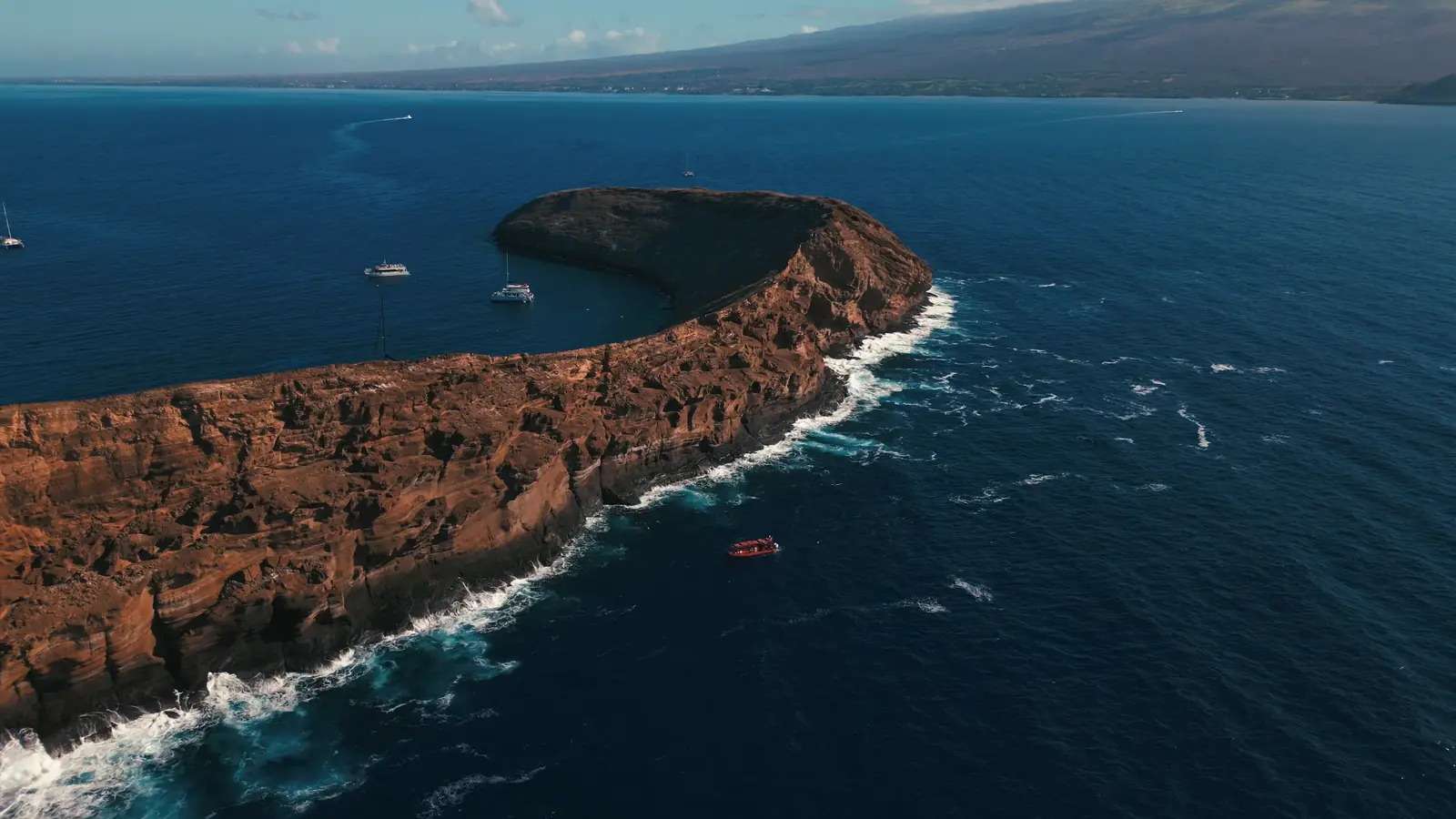
Most visitors snorkel inside the crater. The outside, with the Back Wall, sees far fewer people, mostly scuba divers. The wall falls past 200 feet. If a trip stops at the Back Wall, the grey reef sharks and ulua are the animals the tagging study placed there.
You do not need to plan on meeting a shark, and no trip should promise one. Nothing here should be read as an invitation to look for one.
What the state's records show
The Hawaiʻi Department of Land and Natural Resources keeps a shark incident list. It had 174 dated rows from June 1995 to September 2026. None names Molokini. Maui has 67 of those rows. The list leaves out encounters where nobody was bitten, so it says nothing about sightings.
Nearby, four fatal bites appear on the South Maui coast:
- Three were on snorkelers, 50 to 200 yards from shore in murky water (Palauea 2013, ʻĀhihi Bay 2015, Keawakapu 2022).
- One, in December 2013, was a kayak fisherman about 900 yards off Mākena in clear water. The state considers that one provoked.
These bites happened near this coast, not at Molokini. The three snorkeler cases share murky water close to shore. The fatal 2013 case was far offshore in clear water and involved a person fishing.
Has anyone been bitten at Molokini
Not on the state's list. That is the state's record, and it is a count of reported bites only. It cannot rule out an unreported event, and it does not track sightings at all, so we do not claim that a bite is impossible.
The four fatal cases on the nearby coast, described above, are the closest records we have.
Sharks and the fish around them
Molokini's reserve holds more than six times the fish by weight of the adjacent water, and the tagging study documented sharks, ulua, ʻōmilu and uku inside it. Feeding fish is banned in the district, and so is putting food or any attractant in the water near marine life.
How common are bites
DLNR says Hawaiʻi averages about three or four shark incidents a year. Its graph shows 3.98 a year from 1980 to 2025 and 6.4 a year from 2016 to 2025. About 40 species of sharks live in Hawaiian waters. The state says the role of sharks on the reef is not fully understood, and that they may help keep fish numbers in check.
What the state advises
DLNR's tips:
- Swim with other people.
- Stay out of the water at dawn, dusk and night.
- Do not enter the water with an open wound or bleeding.
- Avoid murky water, harbor entrances, stream mouths, channels and steep drop-offs.
- Skip high-contrast clothing and shiny jewelry.
- Avoid splashing a lot.
- Never provoke or harass a shark, even a small one.
If you see one
DLNR says to leave the water quickly and calmly if a shark is sighted, and never to provoke or harass one, even a small one. At Molokini that means returning to your boat or group without splashing. Do not chase a shark for a closer look or try to touch it.
The bigger risk
Is a shark the main thing to worry about? On the records, no. Drowning is.
Among Hawaiʻi's ocean drowning victims, snorkeling is the most common activity: 206 snorkeling drownings from 2009 to 2018, 189 of them non-residents. Statewide, about 21 snorkelers died each year in that period, and the average age was 59.
Molokini recorded 15 ocean drownings in the same ten years, and 14 of the 15 were from the U.S. mainland. The record does not say how many were snorkeling.
Maui County had 193 ocean drownings over that period, and 48 percent of them were snorkeling. The state numbers are not a measure of how dangerous Molokini is on a given day. They do show that the hazard in front of a snorkeler is water, effort and health, and that it falls mostly on non-residents.
What helps: tell the crew about any health conditions before you board, use the flotation if you want it, and stay near your group. Several operators, among them Trilogy, Calypso and Maui Snorkel Charters, list flotation gear, and Redline Rafting's two-hour trip lists flotation belts. Read the in-water safety tips before your trip.
Keep reading
- Marine life at Molokini for the rest of the reef.
- The fish guide for what you are more likely to see.
- The crater guide for depth, rules and timing.
- Operators whose trip pages list a Molokini back side stop, conditions permitting, include Blue Water Rafting, Pacific Whale Foundation, Redline Rafting and Trilogy.
Sources and corrections
The 14 sources for this page
- Filous et al. (2017), Marine Pollution Bulletin 121:274-281, study of reef predators and crowding in the Molokini MLCD (University of Hawaiʻi at Mānoa + DAR Maui). Read in full as Exhibit 2 of BLNR Item F-4 (May 2023): https://dlnr.hawaii.gov/wp-content/uploads/2023/05/F-4.pdf (University of Hawaiʻi at Mānoa / Hawaiʻi DLNR DAR), read . Backs: Tagged predators including whitetip and grey reef sharks. · Grey reef sharks and ulua near the deep water of the back wall; whitetips in the crater mostly at night.
- Hawaiʻi Sharks: Incidents List (Hawaiʻi DLNR), read . Backs: The state incident list of 174 rows names no incident at Molokini; it leaves out encounters without a bite. · Fatal bites on the South Maui coast.
- Hawaiʻi Sharks: Fact Sheet (Hawaiʻi DLNR), read . Backs: Encounters between sharks and people are infrequent; about three or four incidents a year; about 40 species; role on the reef not fully understood.
- Maui – Molokini Shoal (HAR 13-31) (Hawaiʻi DLNR, Division of Aquatic Resources (DAR)), read . Backs: Back Wall depth.
- Weng et al. (2023), PLOS ONE 18(4): e0283683, 'Decreased tourism during the COVID-19 pandemic positively affects reef fish in a high use marine protected area' (co-authors from UH Mānoa and DLNR DAR). Read in full as Exhibit 3 of BLNR Item F-4: https://dlnr.hawaii.gov/wp-content/uploads/2023/05/F-4.pdf (UH Mānoa / Hawaiʻi DLNR DAR / VIMS), read . Backs: Most visitors snorkel inside; outside is mostly divers. · More than six times the fish biomass inside.
- Galanis D., 'Fatal ocean drownings, 2009-2018' (slides; page: https://health.hawaii.gov/injuryprevention/wsocon19b/) (Hawaiʻi State Department of Health, Injury Prevention and Control Section), read . Backs: Snorkeling is the most common activity among ocean drowning victims. · Maui County had 193 ocean drownings 2009 to 2018, 48 percent snorkeling. · Profile of snorkeler drownings. · Molokini recorded 15 drownings.
- sailtrilogy.com (Trilogy Excursions), read . Backs: Trilogy lists snorkel gear and flotation as included; its Discover Molokini trip often adds the Molokini back side as a second stop, weather permitting.
- calypsomaui.com (Calypso), read . Backs: Calypso lists snorkel gear and flotation as included.
- mauisnorkelcharters.com (Maui Snorkel Charters), read . Backs: Maui Snorkel Charters lists flotation gear on its 2-hour trip.
- redlinerafting.com (Redline Rafting), read . Backs: Redline's two-hour trip lists flotation belts; its five-hour trip lists Molokini inside and back wall, conditions permitting.
- bluewaterrafting.com (Blue Water Rafting), read . Backs: Blue Water Rafting's 2-hour trip lists Molokini inside, outer reef and/or back side, conditions permitting.
- pacwhale.com (Pacific Whale Foundation), read . Backs: Pacific Whale Foundation's Molokini & Turtle Adventure lists the back side of Molokini when conditions allow.
- HAR chapter 13-31, Molokini Shoal MLCD, Maui (amended and compiled, effective 3/15/2024; unofficial copy) (Hawaiʻi DLNR), read . Backs: Feeding fish is banned.
- Safety Tips, Hawaiʻi DLNR (Hawaiʻi DLNR), read . Backs: DLNR shark safety tips.