Molokini is a sunken volcanic crater off Maui’s south shore, and one of the clearest, most protected reefs in Hawaii. Compare every Molokini snorkel tour by price, boat, trip length and departure point, then book the one that fits your day.
Schematic, not for navigation. Distances are approximate straight lines.
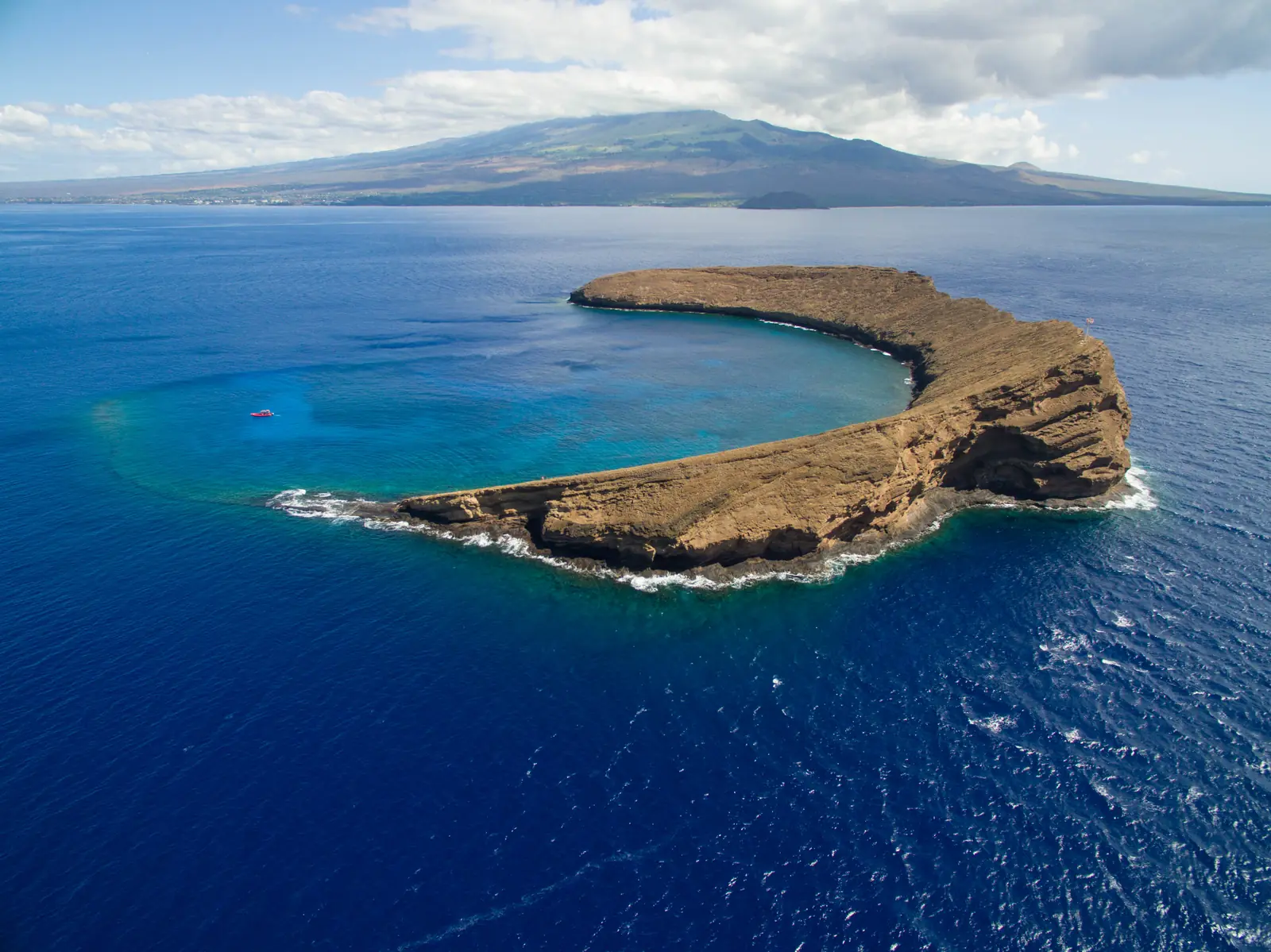
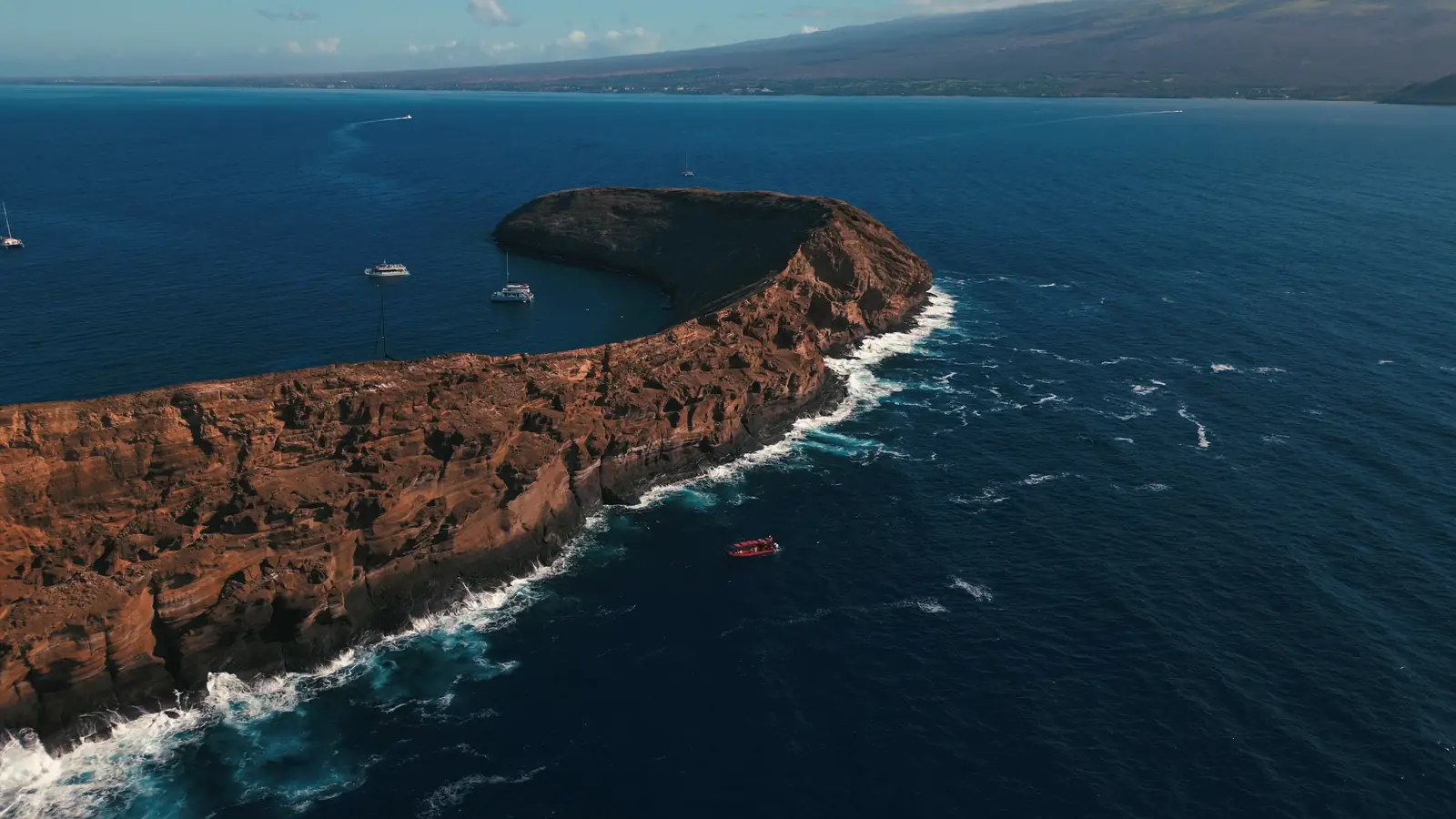
Molokini from above, with Haleakalā and Maui’s south shore behind it.
Molokini snorkel tours
Prices are adult rates before tax, as listed in November 2026. Operators change prices and run sales often, so the booking page always has today’s rate. We may earn a commission when you book through this site.
Our boatOur favorite
From the Kīhei Boat Ramp · About 2 hours · From $129
Redline Rafting: Two-Hour Molokini Snorkel
Our favorite way to snorkel Molokini: a quick ride out, a good stretch of time in the crater, and you’re back on land with the rest of your day free. It’s about a 15-minute boat ride from Kīhei, with no more than 14 guests and Molokini guaranteed.
Snorkel gear, life jackets and flotation belts included · Ages 8 and up · Rafts are faster and bouncier than big catamarans, and there’s no bar
The closest launch to Molokini. The 65-foot catamaran loads straight off the beach in Mākena, so the ride is short. The Sunrise Deluxe arrives at Molokini first thing; the mid-morning Signature Deluxe adds a gourmet lunch.
Best for: Wailea and Mākena guests · Food and open bar · Shuttle from Wailea available
Small rafts from the Kīhei Boat Ramp with three choices: a 2-hour Molokini express, a 3-hour Molokini and Turtle Town trip, or a 5.5-hour day that adds the remote Kanaio Coast sea caves and up to three Molokini sites, including the back side.
Best for: adventurous snorkelers who want the wild coastline · No restrooms on board · No alcohol
The easy family choice. Two snorkel stops, a learn-to-snorkel class, naturalists on board, a junior naturalist program and a water slide, with breakfast and a barbecue lunch grilled on board. 100% of profits support the nonprofit’s ocean programs.
Best for: families and first-time snorkelers · Children 4 and under free
Maui’s largest power catamaran, run at well under its Coast Guard capacity so there’s room to spread out. Breakfast, a barbecue lunch, an open bar, a water slide and an optional Snuba add-on. The same company runs the smaller luxury catamaran ʻElua.
Best for: big-boat comfort and an all-inclusive day · Family-owned since 1983
A big, stable triple-deck catamaran with two water slides, a jump platform and a glass-bottom viewing area. Breakfast and a grilled lunch are included; drinks are available after snorkeling.
Best for: families and anyone who wants a steady ride · Accessible for manual wheelchairs
A 55-foot power catamaran with easy stairways into the water at the front and back, two restrooms and plenty of flotation. Two snorkel stops, usually Molokini and Turtle Town, with breakfast and lunch.
Best for: good value on a comfortable mid-size boat
The luxury option out of Māʻalaea: a large sailing catamaran that runs well under capacity, with a full breakfast, a buffet lunch and an open bar. Optional transportation is available.
Best for: a special-occasion day with room to spread out · Run by Aliʻi Class Yachts
A long-running family company on spacious sailing catamarans. Two stops, Molokini and often Turtle Town, with homemade cinnamon rolls for breakfast, a barbecue chicken lunch and two cocktails on the sail home.
Best for: a classic sail-and-snorkel day · Snuba upgrade for ages 8 and up
A proper sailing trip on the 54-foot performance catamaran Akialoa, limited to 49 guests. Breakfast on the way out, lunch and an open bar on the way home. If Molokini isn’t safe that day, they sail to another snorkel spot.
Best for: people who care as much about the sail as the snorkeling · All ages
Maui Classic Charters’ faster 54-foot power catamaran. It leaves early to beat the crowds to Molokini, then heads to a second site for turtles, with breakfast, a taco-bar lunch and an open bar.
Best for: more snorkel time on a mid-size boat · Ages 5 and up
A mid-size boat that caps its group size, with a continental breakfast and deli lunch. The standout is the optional Snuba add-on for going deeper than a snorkel allows.
A small-group trip on the 54-foot single-deck Ocean Explorer that heads for the less-visited back side of Molokini, then a second site such as Turtle Arches or Puʻu Ōlaʻi.
Best for: confident snorkelers who want the back wall · Ages 7 and up
Prefer to sleep in? These shorter afternoon trips leave Māʻalaea around midday. The trade winds usually pick up by afternoon, so the captain decides each day between Molokini and calmer Coral Gardens off West Maui.
One of the few afternoon trips that can still reach Molokini. The captain picks Molokini or Coral Gardens based on the day’s wind and swell. A light lunch is available.
A shorter, later version of the Four Winds trip, usually to Coral Gardens with its turtles, and to Molokini when conditions allow. Lunch, the glass-bottom room and the water slide are all included.
Snuba sits between snorkeling and scuba. You breathe through a regulator connected by a long air hose to a tank floating on a raft at the surface, so you can dive down to about 20 feet with a guide, with no certification needed. It’s best for people who are comfortable snorkeling and want a closer look at the reef.
Trilogy (ages 8 and up), Pride of Maui, Four Winds II and Aqua Adventures offer Snuba as an add-on to their Molokini trips, usually for about $65–$80 more. Spaces are limited, so add it when you book. Read more in our Snuba guide.
Molokini tour prices compared
Adult prices before tax as listed in November 2026; “about” marks prices taken from booking-site listings rather than the operator’s own site.
Tour
Leaves from
Boat
Length
Snorkel stops
Adult price
Redline 2-hour (our favorite)
Kīhei Boat Ramp
Raft, up to 14
About 2 hours
Molokini
From $129
Redline 5-hour Adventure
Kīhei Boat Ramp
Raft, up to 24
About 5 hours
Molokini incl. back wall, South Maui coast
From $209
Blue Water Rafting
Kīhei Boat Ramp
Raft
2, 3 or 5.5 hours
Molokini; Turtle Town or Kanaio Coast
From about $140
Pride of Maui
Māʻalaea Harbor
Large power catamaran
About 5 hours
Molokini, Turtle Town
$213 incl. tax
Kai Kanani
Maluaka Beach, Mākena
65-ft catamaran
About 3.5 hours
Molokini, Turtle Town
From $259
Pacific Whale: Turtle Arches
Māʻalaea Harbor
Catamaran
About 5 hours
Molokini, Turtle Arches
From $219.95
Calypso
Māʻalaea Harbor
Triple-deck catamaran
About 5–5.5 hours
Molokini, Turtle Town
About $179
Malolo
Māʻalaea Harbor
55-ft power catamaran
About 5 hours
Molokini, Turtle Town
About $160
Aliʻi Nui
Māʻalaea Harbor
Luxury sailing catamaran
About 5 hours
Molokini, second site
About $289
Trilogy
Māʻalaea Harbor
Sailing catamaran
About 5 hours
Molokini, often Turtle Town
About $200
Sail Maui
Māʻalaea Harbor
54-ft sailing catamaran
About 5 hours
Molokini or alternate site
From $200
Four Winds II
Māʻalaea Harbor
55-ft glass-bottom catamaran
About 5 hours
Molokini
From $190
Maui Magic
Māʻalaea Harbor
54-ft power catamaran
About 5 hours
Molokini, turtle site
From $205
Aqua Adventures
Māʻalaea Harbor
Mid-size boat
About 5 hours
Molokini, Turtle Arches
About $175
Pacific Whale: Wild Side
Māʻalaea Harbor
54-ft catamaran, small group
About 5–6 hours
Molokini back side, second site
About $198
Malolo Afternoon
Māʻalaea Harbor
55-ft power catamaran
About 3 hours
Molokini or Coral Gardens
About $90
Four Winds II Afternoon
Māʻalaea Harbor
55-ft glass-bottom catamaran
About 3.5 hours
Coral Gardens or Molokini
From $125
Where you leave from matters
The ride out is part of the trip. A shorter crossing means more time in the water and less time for seasickness; a longer one on a big catamaran can be the relaxing part of the day.
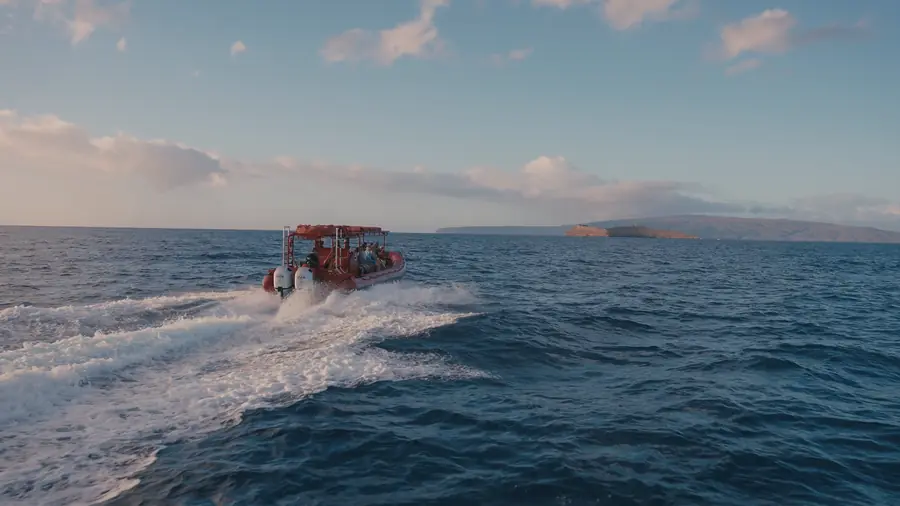
Heading out from South Maui: Puʻu Ōlaʻi at left, Molokini and Kahoʻolawe on the horizon.
≈3.5 mi to Molokini
Maluaka Beach, Mākena
The closest launch. Boats load from the sand, so expect to get your feet wet. Ideal if you’re staying in Wailea or Mākena.
≈6 mi to Molokini
Kīhei Boat Ramp
Central South Maui, a short drive from Kīhei and Wailea. Small, fast boats like rafts launch here.
≈11 mi to Molokini
Māʻalaea Harbor
Home of the big catamarans and sailboats. The longest crossing, but the easiest drive if you’re staying in West Maui or central Maui.
Know before you go: snorkeling Molokini Crater
1. Some of the clearest water in Hawaii
On a calm day you can see 100 to 150 feet down. The crescent-shaped rim blocks much of the open-ocean swell, so the water inside the crater is usually calmer and clearer than at Maui’s beaches, especially in the morning before the trade winds arrive.
Clear water along the inside of the rim.
2. The rim of an ancient volcano
Molokini is what’s left of a volcanic cone that erupted from the seafloor between Maui and Kahoʻolawe. Geologists estimate it formed roughly 230,000 years ago; over time the sea broke through one side, leaving the crescent you see today.
3. Small islet, deep water
The islet covers about 20 acres and rises roughly 160 feet above the sea. Inside the crescent the reef is shallow enough to snorkel; outside, the back wall drops more than 300 feet into deep blue water, which is why only some trips snorkel it.
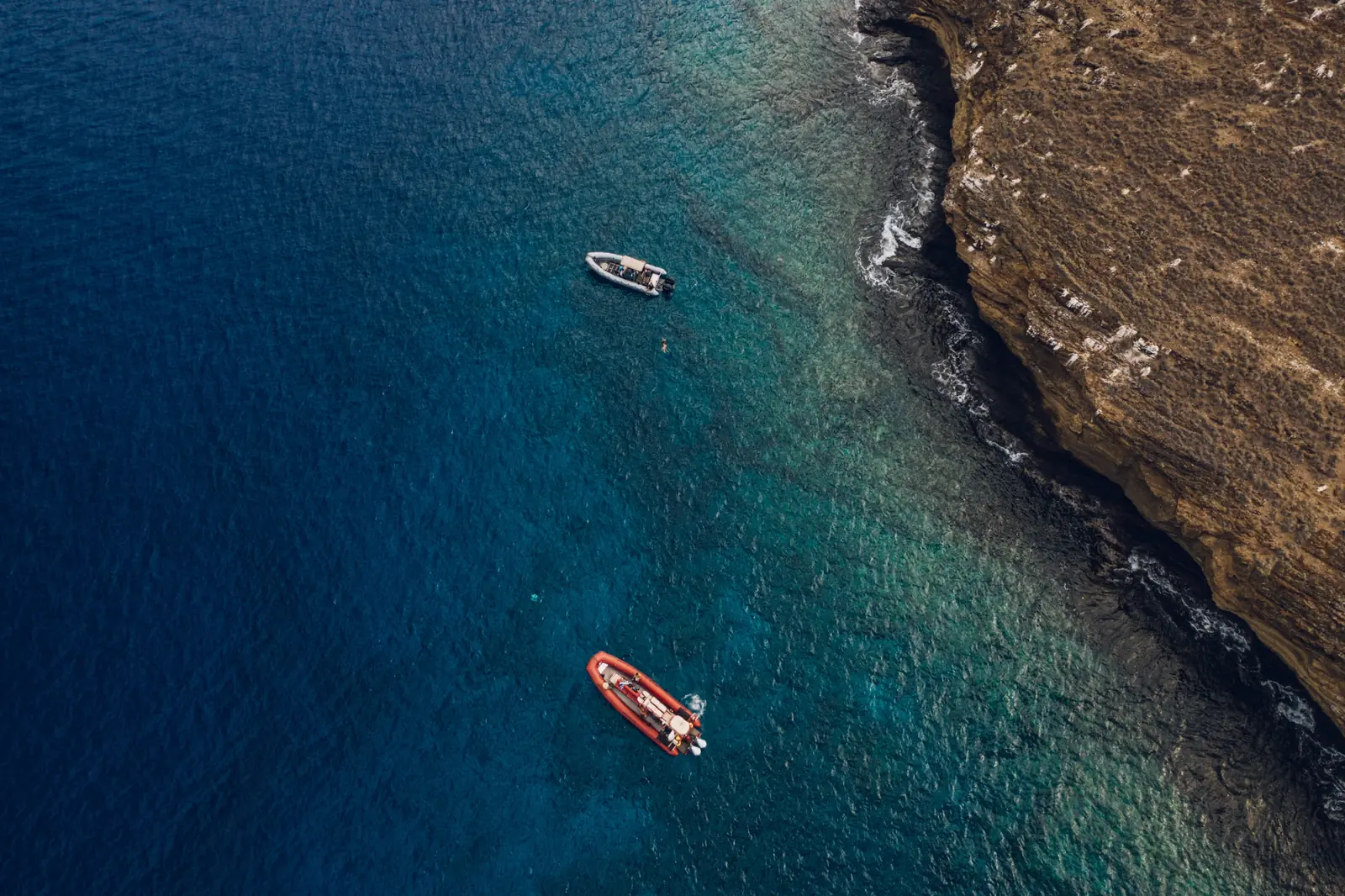
The outer back wall, where the cliff drops into deep water.
4. More than 250 kinds of fish
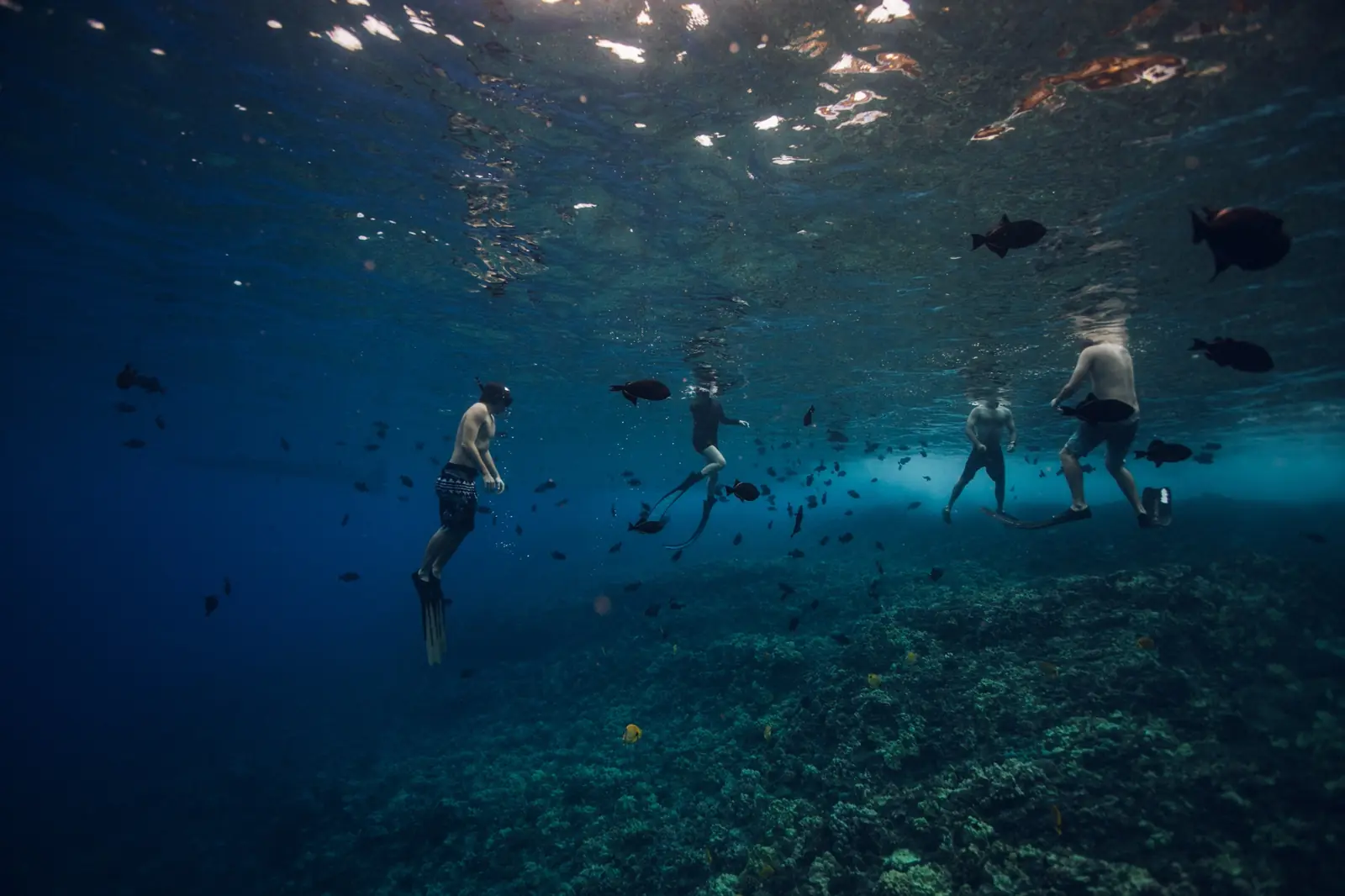
Snorkelers and a crowd of black triggerfish over the reef.
Marine biologists have recorded more than 250 fish species and 38 species of coral at Molokini, including Hawaii’s state fish, the humuhumunukunukuāpuaʻa or reef triggerfish. See our Molokini fish and reef guide and sharks at Molokini Crater.
5. From fishing ground to marine sanctuary
Native Hawaiians fished here for centuries, and during World War II the U.S. military used the islet for bombing practice. Today Molokini is a state seabird sanctuary and the surrounding waters are a Marine Life Conservation District, so you can’t take or feed marine life, and you should never touch or stand on coral. Read the full history of Molokini.
When to go
Mornings are best year-round. Winter brings humpback whales, roughly December through April. Maui’s water typically runs from the mid-70s °F in late winter to around 80 °F in late summer. More in the best month for Molokini snorkeling and Maui water temperatures.
What to bring
Mineral, reef-safe sunscreen (Hawaii bans sunscreens with oxybenzone and octinoxate), a towel, a hat and a light layer for the ride home. Most boats provide masks, snorkels, fins and flotation, and many don’t allow full-face masks.
How to choose your Molokini snorkel tour
Short on time
A two-hour raft from Kīhei or a 3.5-hour catamaran from Mākena gets you to Molokini and back by late morning.
On a budget
The two-hour raft and the afternoon catamarans are the lowest-priced ways to snorkel Molokini; five-hour trips include more food and a second stop.
Prone to seasickness
Choose the shortest crossing, from Mākena or Kīhei, or a big catamaran, which rides more smoothly than a small boat.
Young kids
Pacific Whale Foundation, Four Winds II and Calypso are built for families, with slides, flotation and kids’ programs.
Non-swimmers
The Four Winds II and Calypso have glass-bottom viewing areas, and every boat provides flotation.
A sailing day
Sail Maui, Trilogy and Aliʻi Nui put up sails, which makes the crossing quieter and more relaxing.
Molokini snorkeling questions
Can you snorkel Molokini without a tour?
For most visitors, no. Molokini sits about three miles off Maui’s south coast, there’s no beach to swim from, and the islet itself is a protected seabird sanctuary you can’t land on. A tour boat is the practical way to get there.
How much does a Molokini snorkel tour cost?
Most Molokini snorkel tours cost roughly $125 to $310 per adult before tax. Short trips, like a two-hour raft from Kīhei or a three-hour afternoon catamaran, are at the low end; five-hour luxury sails with an open bar are at the top. Prices change often, so check each operator’s booking page.
What’s the cheapest way to snorkel Molokini?
Shorter trips usually cost less than five-hour, all-inclusive cruises. A two-hour raft from Kīhei or a three-hour afternoon catamaran from Māʻalaea are typically the lowest-priced options, though afternoon boats only go to Molokini when the wind allows.
What’s the best time of day to snorkel Molokini?
Morning. The water is usually calmest early, before the trade winds build. Afternoon trips exist, but they often switch to a calmer site like Coral Gardens when Molokini is too windy.
Are there sharks at Molokini Crater?
Yes, occasionally. Whitetip reef sharks are sometimes seen resting near ledges along the crater, and they’re generally shy around snorkelers. Seeing one is usually a highlight, not a worry.
Is Molokini guaranteed on every tour?
No. Ocean conditions decide, and many boats go to another snorkel site when Molokini isn’t safe. Redline Rafting guarantees Molokini on its trips. Check each operator’s policy before you book.
How long is the boat ride to Molokini?
It depends on where you leave from. In a straight line Molokini is roughly 3.5 miles from Maluaka Beach in Mākena, about 6 miles from the Kīhei Boat Ramp and about 11 miles from Māʻalaea Harbor.
Can I wear a full-face snorkel mask?
Often not. Several Molokini operators, including Sail Maui and Pacific Whale Foundation, don’t allow full-face masks. Boats provide standard masks and snorkels, and some carry prescription masks.
Is Molokini good for kids?
Yes, on the right boat. Big catamarans with slides, flotation and kids’ programs suit young children, and several let children under 4 ride free. Some boats have minimum ages, such as 5 and up on the Maui Magic and 8 and up on Redline Rafting.
What if I can’t swim?
You can still enjoy the trip. Boats provide flotation, and the Four Winds II and Calypso have glass-bottom viewing areas so you can watch the reef while staying dry.
When can you see whales on a Molokini trip?
Humpback whales are in Maui’s waters in winter, roughly December through April, with the peak from January through March, so morning snorkel trips in those months often include whale sightings.
Can I try Snuba at Molokini?
Yes. Several boats, including Trilogy, Pride of Maui, Four Winds II and Aqua Adventures, offer Snuba as an add-on: you breathe through a long hose from a raft at the surface, so you can dive a little deeper than snorkeling without scuba certification.