
Fall
Molokini Crater tours in fall
The short answer Fall is a good time. September has the warmest water in NOAA's table, and November brings the first humpback whales. Hurricane season runs to Nov 30, so read the forecast and your operator's policy.
On this page
Fall works for a Molokini trip. September has the warmest water of the year in NOAA's table, October is where the wind pattern starts to change, and by November the first humpbacks are due.
What the numbers say
NOAA's monthly averages at Kahului Harbor, on Maui's north shore, are 80.7°F for September, 80.0°F for October and 78.3°F for November. Molokini is on the other side of the island, so treat these as a guide and not a reading.
Trade winds blow 80 to 95 percent of the time from May to September. From October to April that drops to 50 to 80 percent. That is a lower share, so trade winds will be absent on more days. We found no source that says fall is calmer or quieter, so we won't claim it.
Time of day still matters more than the month, and most Molokini boats leave in the morning. The best month guide has the full-year table and the reason.
Whales in November
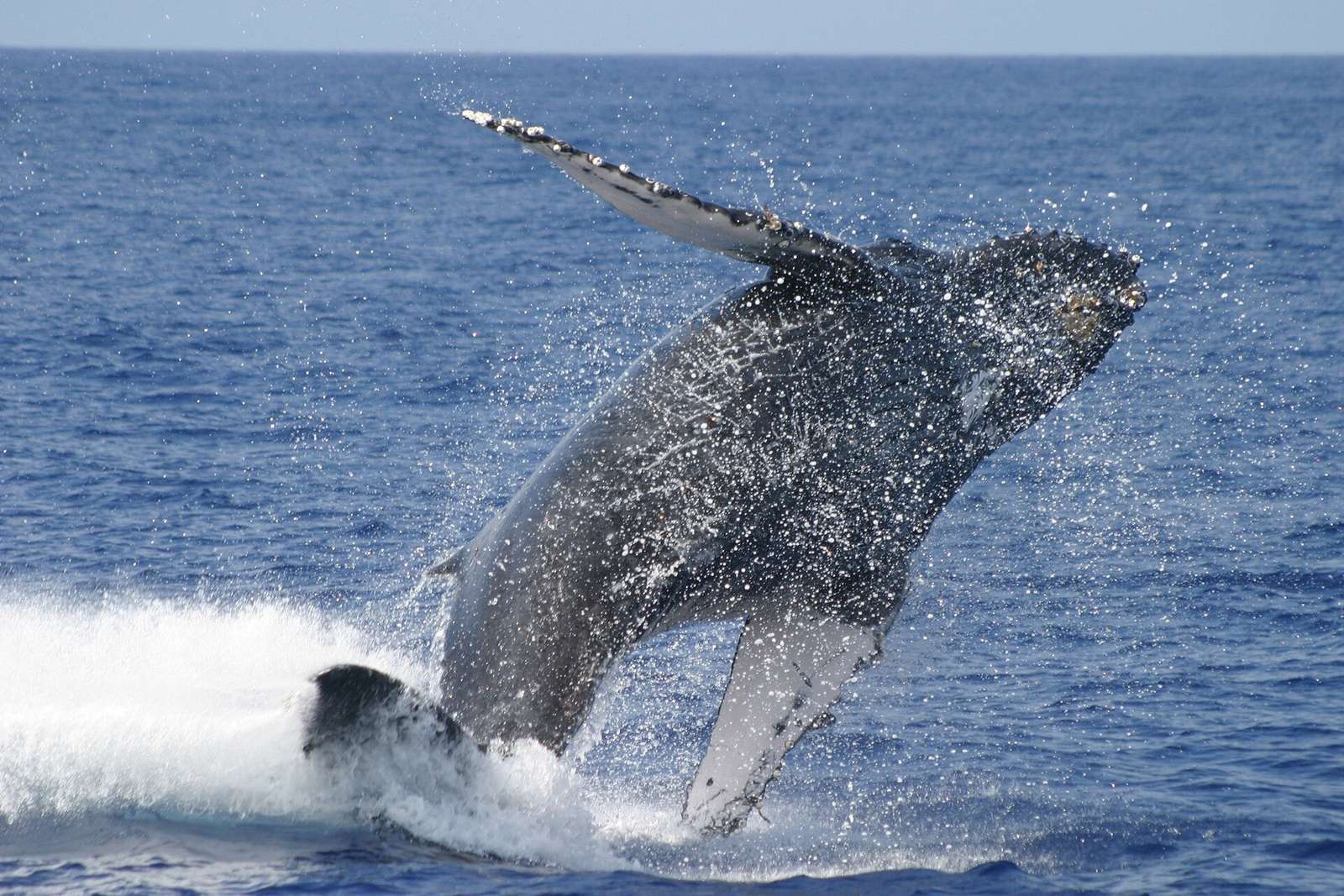
A November whale is possible, but the odds are lower than in February. Whale trips start later. Trilogy, for example, lists its Māʻalaea whale watch from Dec 15. Each operator sets its own whale dates, so check the trip page. The whale watch or snorkel guide has the season dates and the trade-off.
Storm season
NOAA's National Hurricane Center gives June 1 to November 30 as the Central Pacific hurricane season. That covers all of fall.
You can't plan around one storm weeks out. What you can do:
- Check the forecast from the National Weather Service for Maui a few days before.
- Read your operator's weather and cancellation terms before you pay. They differ, and we did not find a common rule.
- Keep a flexible day in your schedule if you can.
Four Winds words its Molokini stop as weather permitting. The month guide compares operators' weather terms.
Families and couples
Pick the guide for your group, then check who is sailing on your dates.
For families, read the kids guide and compare boats with child fares. In fall, the thing to check is the start time: a 6:30 a.m. check-in is a hard morning for young children, so look at when each boat boards. Minimum ages differ by trip, and each operator sets its own. Ask also how the operator handles infants and toddlers, since fare cutoffs for young children vary from page to page. A larger boat with shade suits small children better than a bare raft deck; a raft suits a group that wants a smaller, more active trip.
For couples, read the couples guide. In fall, check whether drinks are included or extra on the trip page, and whether the boat is a larger catamaran or a raft. Both are listed in the trip comparison. Book the earliest departure your group can manage, and keep the afternoon free.
Booking in November
Thanksgiving week is its own case. See Thanksgiving and the holidays on Maui.
Sources and corrections
The 7 sources for this page
- sailtrilogy.com (Trilogy Excursions), read . Backs: Trilogy's Māʻalaea whale watch runs December 15 to April 15.
- NOAA NCEI Coastal Water Temperature Guide, Hawaiian Island Coast monthly average table (station: Kahului, Kahului Harbor). Product page: https://www.ncei.noaa.gov/products/coastal-water-temperature-guide (NOAA National Centers for Environmental Information), read . Backs: Monthly average sea-water temperature at Kahului Harbor (NOAA), north-shore gauge: September 80.7, October 80.0, November 78.3.
- Climate of Hawaii (state climate narrative; served from wrcc-archive.dri.edu) (Western Regional Climate Center (a NOAA regional climate center)), read . Backs: Trade winds blow 80 to 95 percent of the time from May to September and 50 to 80 percent from October to April; leeward areas often get an afternoon sea breeze.
- About the Sanctuary, Hawaiian Islands Humpback Whale National Marine Sanctuary (NOAA Office of National Marine Sanctuaries), read . Backs: Humpbacks are generally seen November through April, peak January through March.
- Maui – Molokini Shoal (HAR 13-31) (Hawaiʻi DLNR, Division of Aquatic Resources (DAR)), read . Backs: DLNR says currents may get stronger inside the cove in the afternoon when winds pick up.
- Glossary of NHC Terms (NOAA National Hurricane Center), read . Backs: The Central Pacific hurricane season runs from June 1 to November 30.
- fourwindsmaui.com (Maui Classic Charters), read . Backs: Four Winds II: Molokini weather permitting, may go to Coral Gardens.